
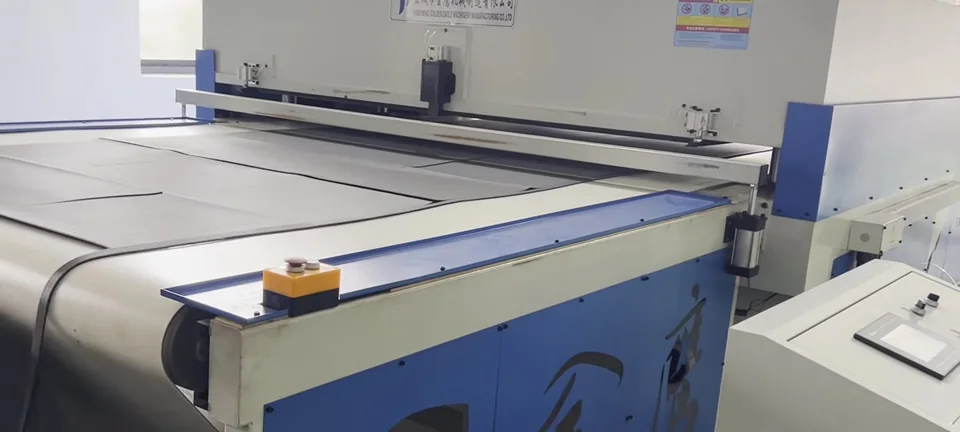
A belt-fed die cutting press can cut several carpet tiles in one pressing operation when the die layout, material and required cutting force suit the machine. The GEA-B1200 demonstration shows this arrangement, including tile outlines on the output belt.
From carpet material to a die-defined shape
The conveyor supplies the material to the pressing area. The press applies force to a cutting die, whose outline determines the shape of the part. The belt then carries the cut material out of the pressing area.
The video presents carpet and felt applications and shows a carpet tile layout. Changing to an automotive mat or another outline requires the corresponding die and a review of the material and feeding setup. A different part drawing changes the die layout and may change the pressing requirement.
Matching the die layout to the job
For tile production, the number of outlines in the die affects the total cutting-edge length and the pressing requirement. The layout also has to fit the material width and usable working area. Part dimensions come from the die, so the drawing and die arrangement are central to selecting the press.
When assessing a similar cutting machine configuration, provide the carpet construction, backing, thickness and tile drawing. State whether the incoming material is supplied as a roll or as sheets. These details help determine the required feeding and handling arrangement.
Planning collection and production
Allow for material replenishment, die changes and finished-part collection when planning production. The demonstration shows the cutting arrangement; a throughput figure for a new job needs the actual layout and handling requirements.
You can send the material and part drawing for a configuration review. The same information is needed when a carpet tile layout is replaced by shaped floor mats or felt components.
Watch the process
Watch this process on YouTube.
Yancheng Golden Eagle Machinery Manufacturing Co., Ltd.