
Single- and double-side table feeding automate table movement; roller feeding with a dedicated rear conveying unit supplies sheets individually and continuously. With powered tables, operators still replace each sheet. With the rear sheet supply, operators replenish material as needed and separate cut parts from waste. The choice is about which handling task you need to change.
Powered Table Movement and Continuous Sheet Supply Are Different
Single- and double-side table-feeding machines use motors to move their tables into and out of the cutting area. Operators still position material and dies, collect parts and replace individual sheets.
A roller-fed configuration with a dedicated rear conveying unit can hold a stack of sheets and supply them individually to the cutting machine. The operator replenishes the supply as needed rather than replacing each sheet after cutting.
Start with the task you want to change: pushing the tray, replacing sheets or supplying the next sheet.
Four-Column Press: Manual Tray Handling
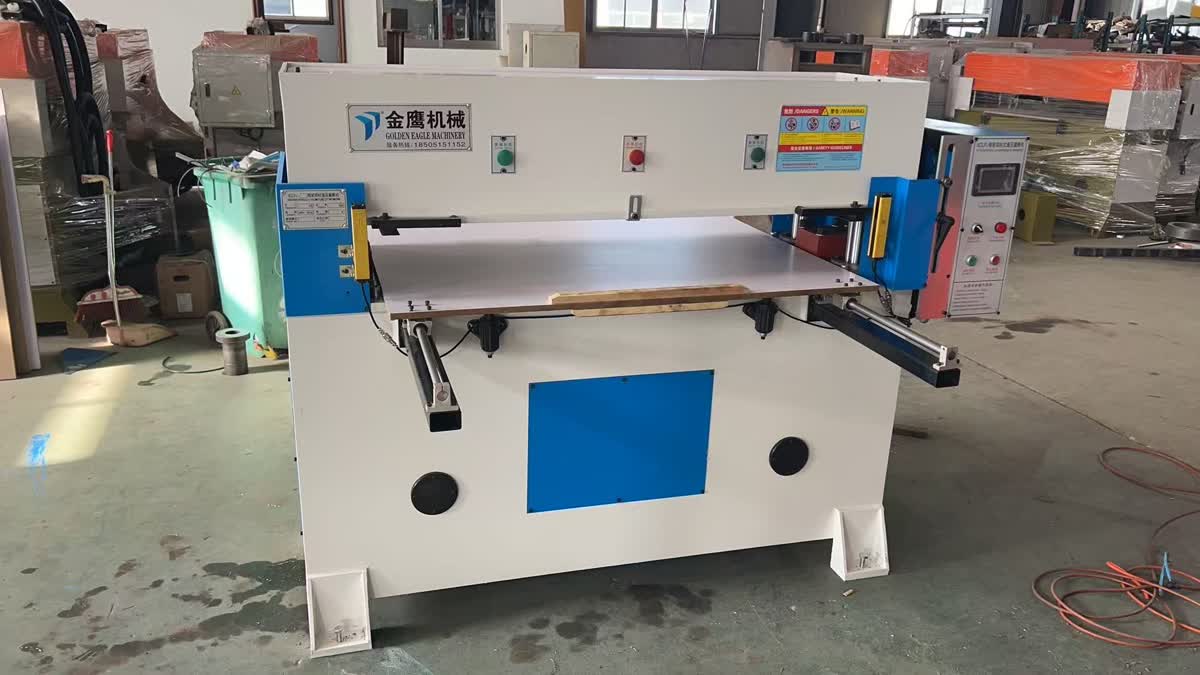
On a basic four-column die cutting press, the operator places the material and die on a tray, pushes the tray into the machine, and pulls it out after cutting to collect parts and replace the material.
Here, the operator handles the tray as well as the material and finished parts.
Single-Side Table Feeding: Replace Manual Tray Movement
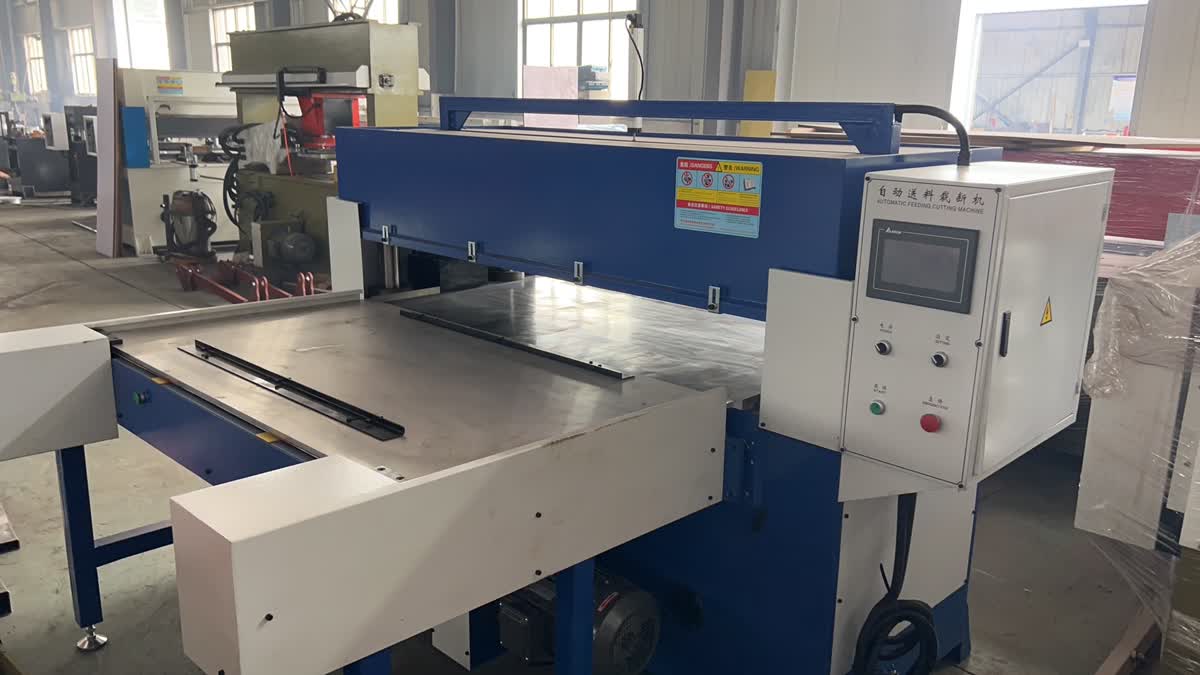
Material and the cutting die are generally placed on the feeding table. After the cycle starts, the powered table enters the press and returns automatically after cutting. The operator collects parts and prepares the next sheet outside the press.
This replaces repeated manual pushing and pulling of the tray; it does not replace the operator who changes each sheet.
Double-Side Table Feeding: Two Stations Share One Press
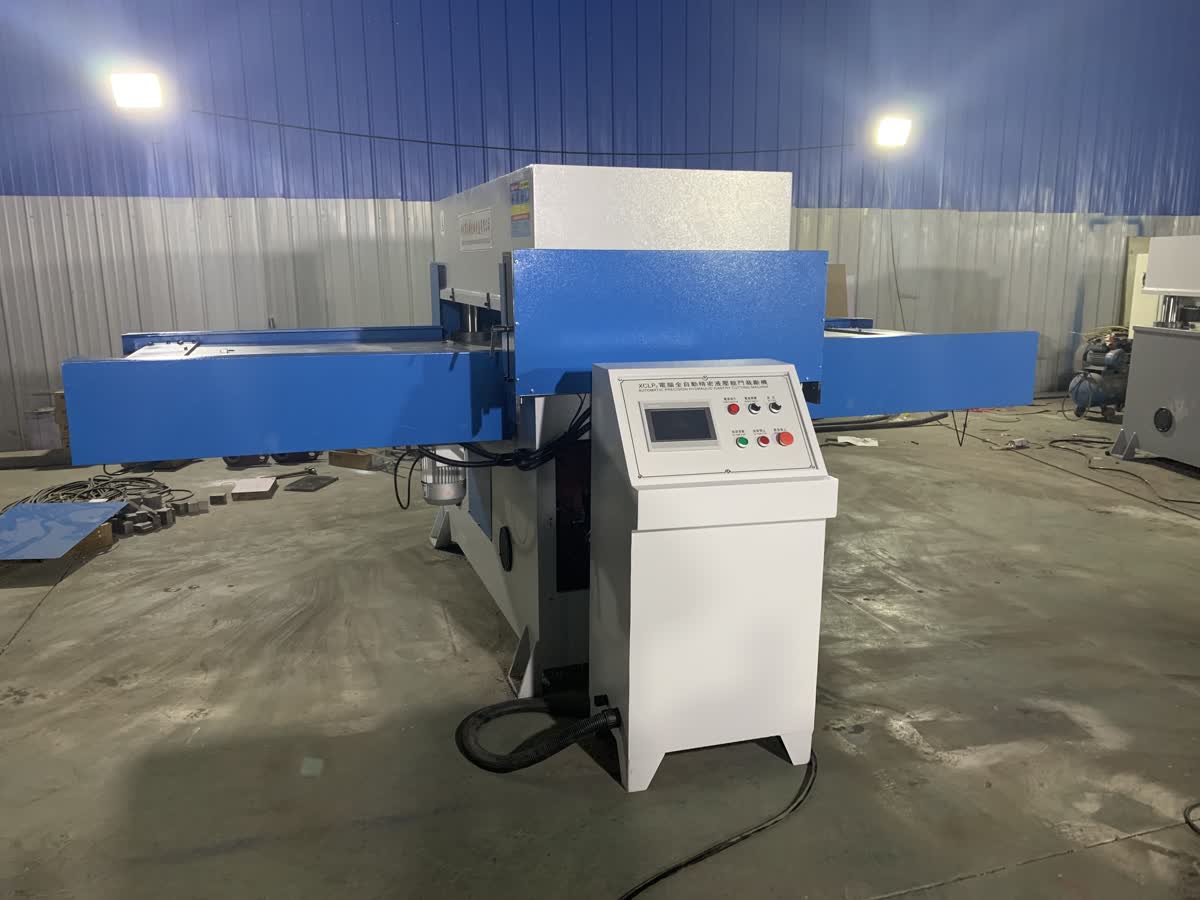
Tables on opposite sides alternate through the cutting area. Two operators can load and unload their respective stations.
The stations can use different dies for different products. Cutting depth and relevant parameters can be set separately for each side.
Choose two stations when their loading sequence and staffing fit the products you plan to run.
Roller Feeding: Supply Sheets Continuously, Like Roll Material
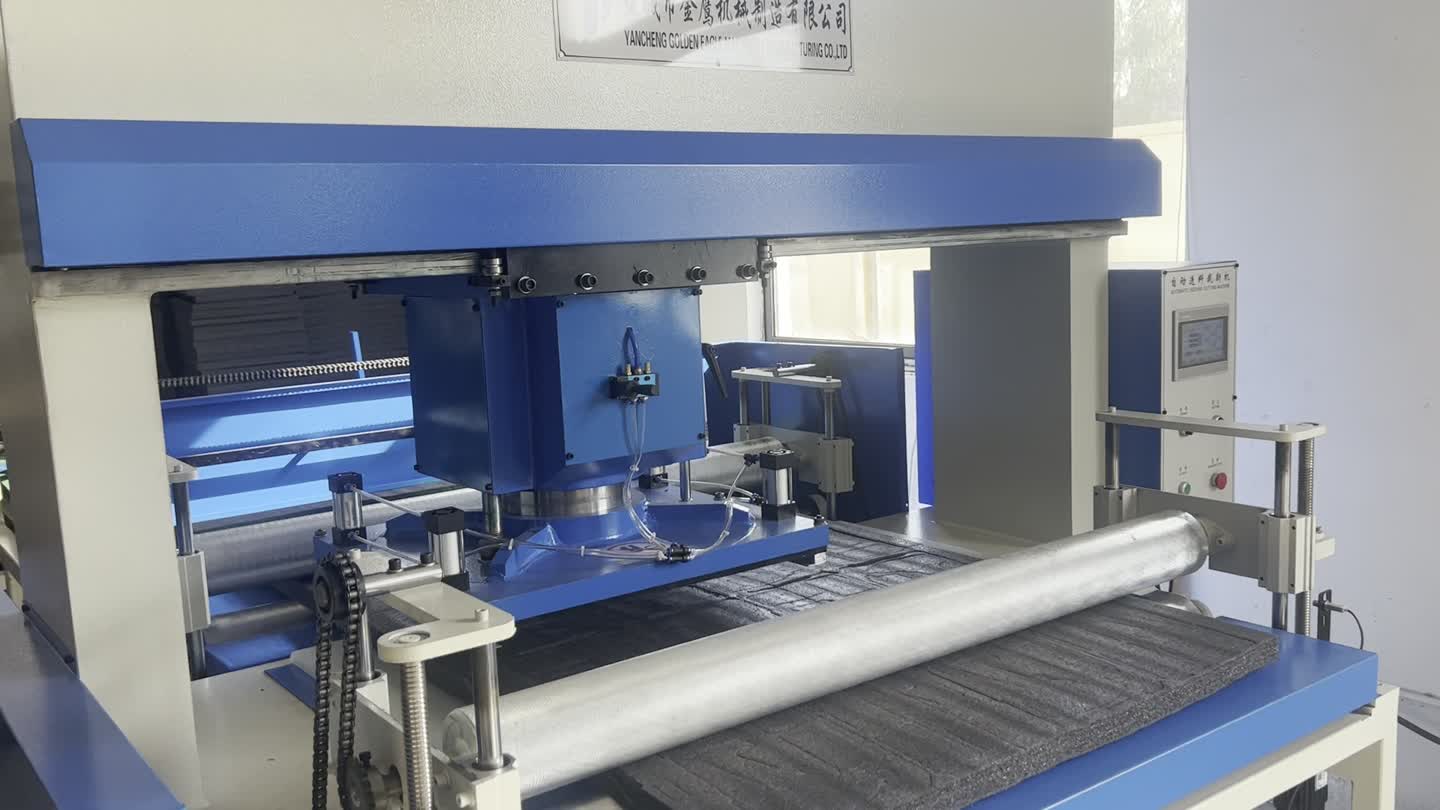
A rear conveying unit supplies sheets individually. When a sensor detects material, the machine advances it by the initial feeding distance to position the first cutting row. Further feeding follows the preset cutting layout. With a traveling-head press, the head moves across the material by the set traverse distance to cut the required positions.
Cut parts and waste leave together. An operator still separates them at the output.
This video shows the roller-fed traveling-head configuration for EPE foam sheet cutting. The operator replenishes the rear sheet supply as needed, and cut parts and waste are separated manually.
Compare the Tasks That Remain Manual
| Configuration | What Moves the Material into the Cutting Area? | How Is Material Replenished? | Part Collection |
|---|---|---|---|
| Basic four-column press | Operator moves the tray | Individual sheets replaced manually | Manual |
| Single-side table feeding | Powered feeding table | Individual sheets replaced manually | Manual |
| Double-side table feeding | Alternating powered tables | Operators replace sheets at their stations | Manual |
| Rear conveying unit with roller feeding | Conveying unit and feed rollers | Operator replenishes the sheet supply as needed | Parts and waste exit together for manual separation |
The comparison below covers these feeding arrangements; other options should be checked against the specific machine.
Plan Three Stages Before Selecting Equipment
- Loading: will operators position each sheet or replenish a stack?
- Cutting-area handling: will a tray be moved manually, a powered table travel in and out, or rollers advance material according to a layout?
- Collection: how will parts and waste be handled, and how many operators are available?
Operating pace depends on material, die layout, product shape and operator coordination. A single production-rate figure does not describe every configuration or job.
To discuss the feeding arrangement, send the sheet dimensions and thickness, a part drawing and a short video showing how you currently load and collect material.