
Material Application / Protective Packaging
Die cutting produces shaped EPE foam inserts for protective packaging. Start with the roll or sheet format, then match the material dimensions, cutting die and feeding method to the job.
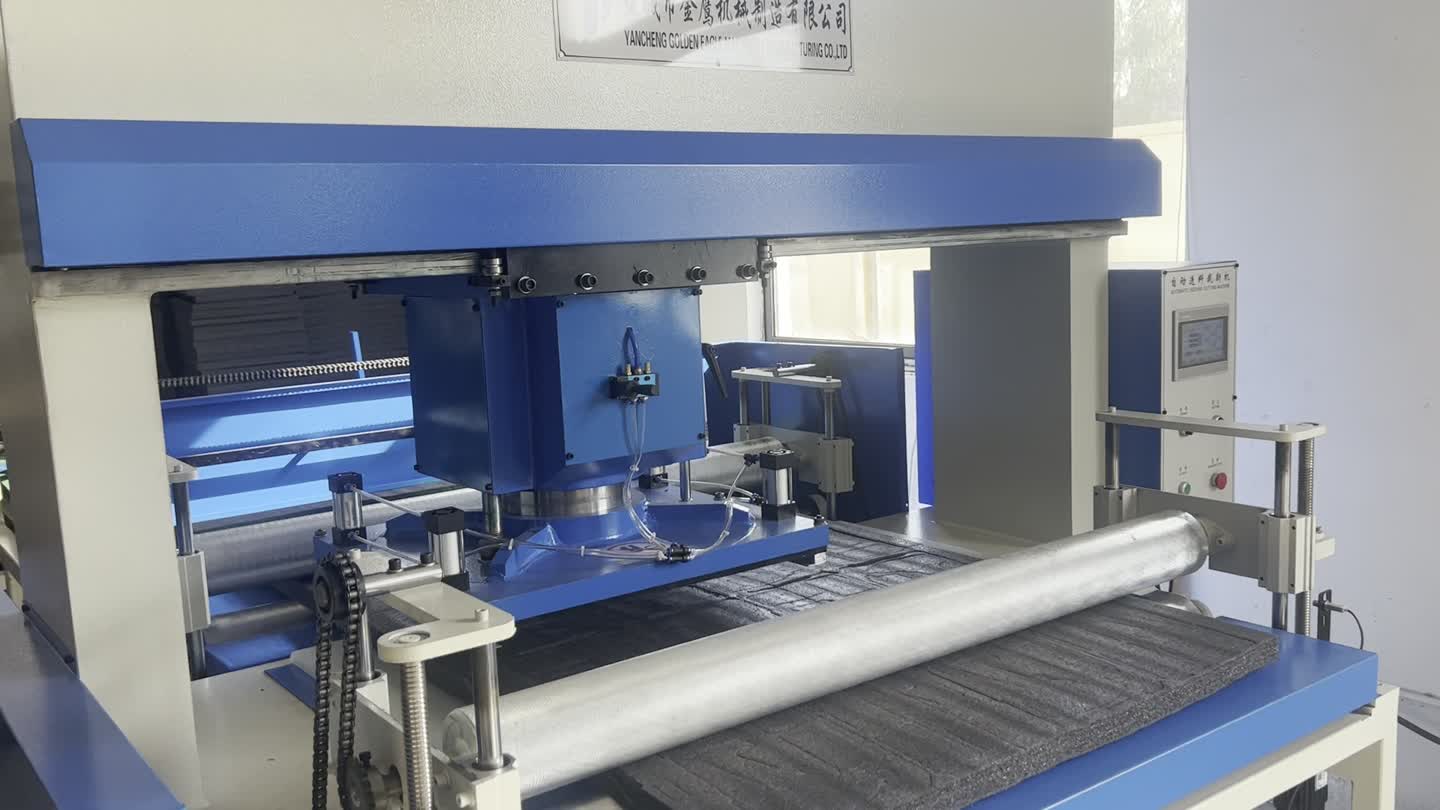
EPE packaging may be cut from several layers of roll material or from thick sheets. The material format changes how it reaches the press and how operators handle the cut parts.
Yancheng Golden Eagle Machinery Manufacturing Co., Ltd. offers four-column, single- and double-side table-feeding, conveyor-fed and roller-fed die cutting machines. Vertical cutting and cross-and-longitudinal slitting equipment can prepare blanks before die cutting where needed.
Two-Stage Pressure to Help Reduce Foam Deformation
Our die cutting machines are equipped with a two-stage pressure system to help reduce EPE foam deformation during cutting and lessen bending along the cut edges.
Check the finished outline and edges as well as the feeding method and cutting force.
Start with Your Material Format
Foam Rolls
Roll material is generally processed with unwind stands and conveyor feeding. For multilayer cutting, each roll needs an unwind position; several positions can be combined into one stand assembly.
The suitable layer count depends on total material thickness, die complexity and available cutting force. Guide boards are generally used to limit lateral movement, with the configuration assessed for the actual material and process.
A conveyor-fed traveling-head machine uses a smaller die and moves the cutting head across the material. A conveyor-fed four-column press can use a larger die to cut a complete row of the layout in one press cycle.
Foam Sheets
Thick sheets are generally die cut one layer at a time. Handling options include a manually moved tray, powered single- or double-side feeding tables, and a rear conveying unit with roller feeding for continuous sheet supply.
Consider sheet dimensions, die size, any pre-cutting step, and how operators replenish material, load the machine, collect parts and separate waste. Thickness alone does not determine the machine or required tonnage.
Compare Sheet-Feeding Options
Four-Column Press: Manual Tray Handling
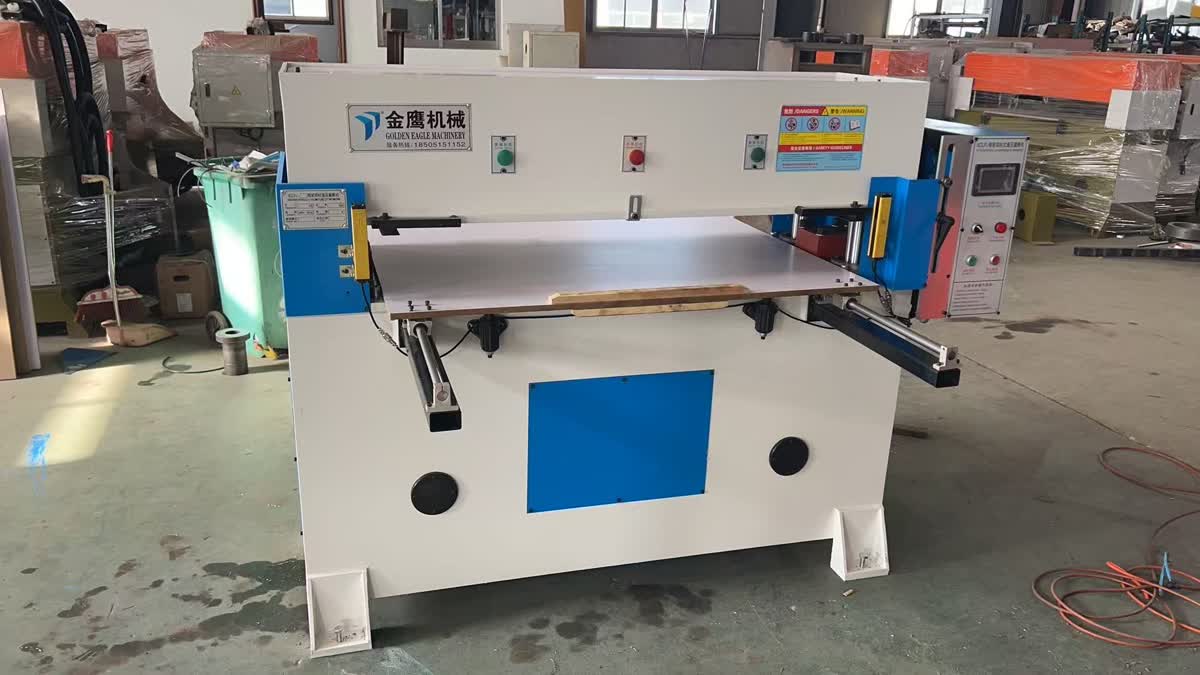
The operator places the material and cutting die on a tray, pushes it into the press, and pulls it out after cutting to collect parts and replace the material.
The operator moves the tray and replaces each sheet by hand. Large, thick sheets may first be cut into blanks suited to the die and cutting operation.
Single-Side Table Feeding: Powered Table Movement
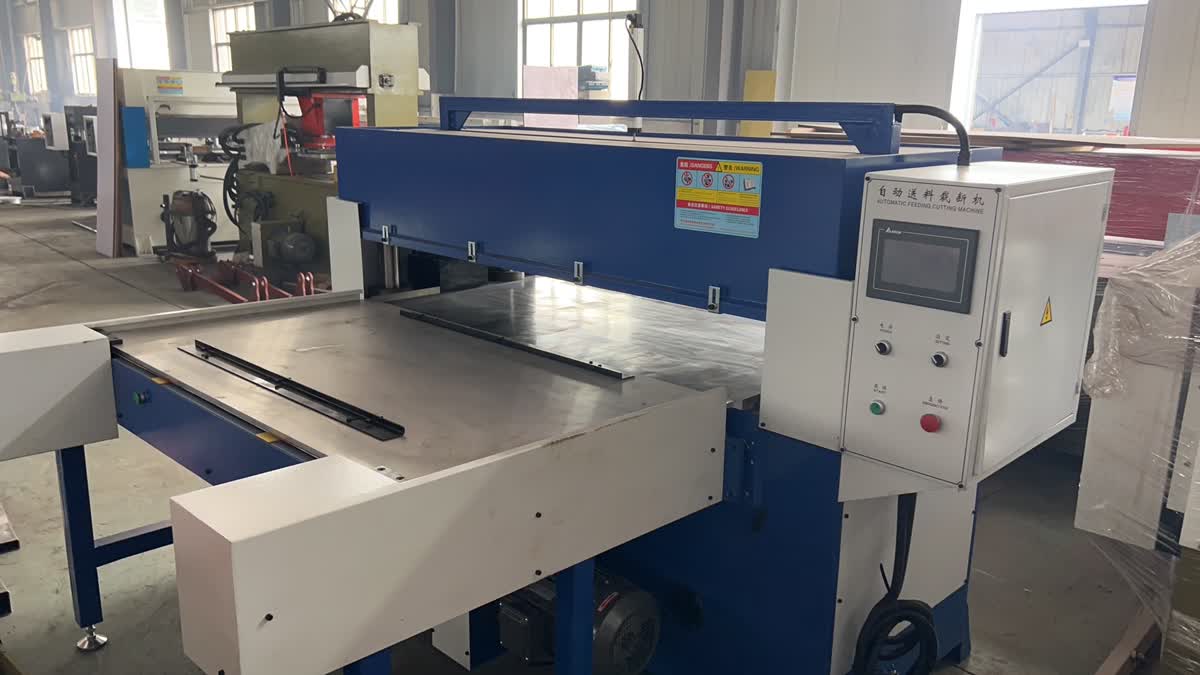
The operator places the material and die on the feeding table. After starting the cycle, the table moves into the cutting area and returns automatically after cutting.
The die is generally placed on the table and travels with it. The operator collects parts and loads the next sheet outside the press. Powered table movement reduces manual pushing and pulling; sheets are still replaced individually by hand.
Double-Side Table Feeding: Alternating Workstations
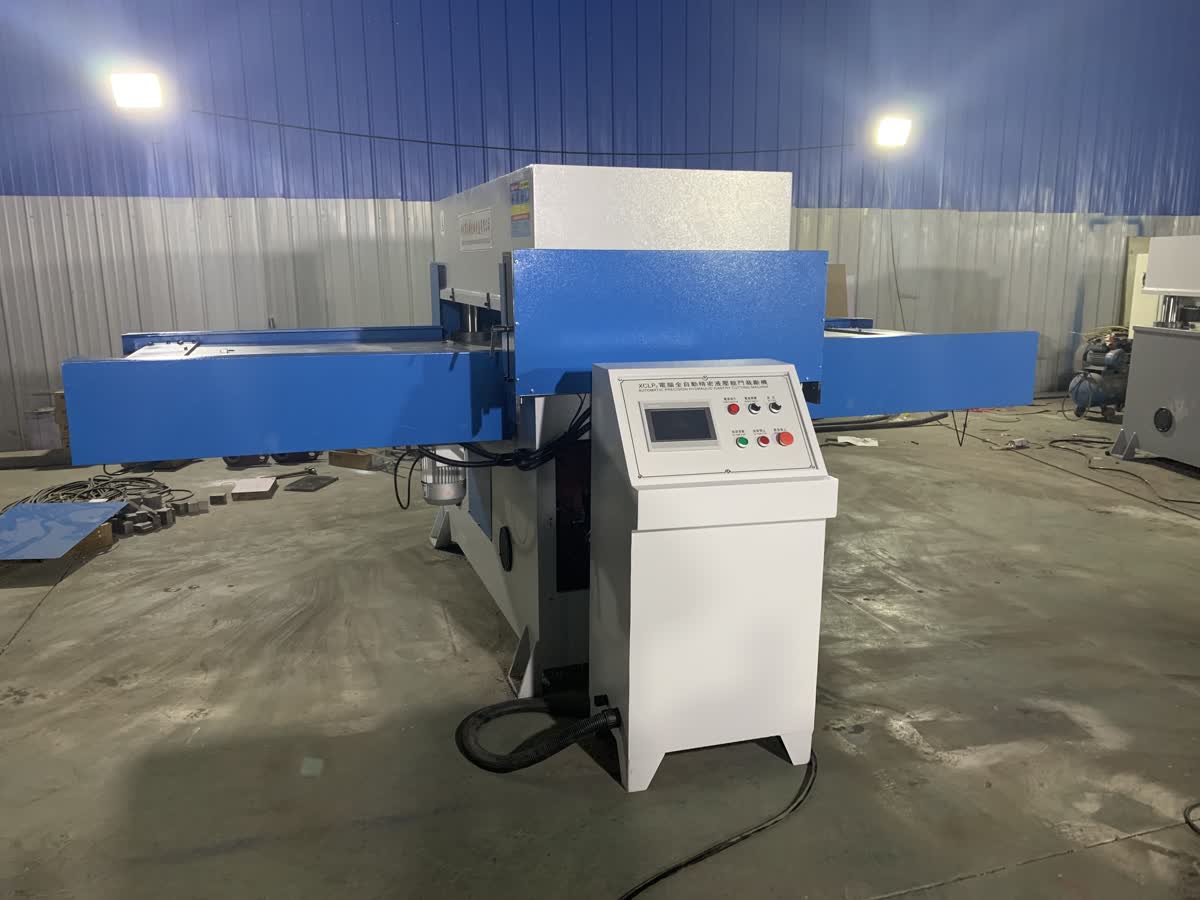
Tables on opposite sides allow two operators to load and unload their respective stations while the tables alternate through the cutting area.
The stations can use different dies for different products, with cutting depth and relevant parameters set separately. Plan which products and operators will use each station.
Roller Feeding: Supply Sheets Continuously, Like Roll Material
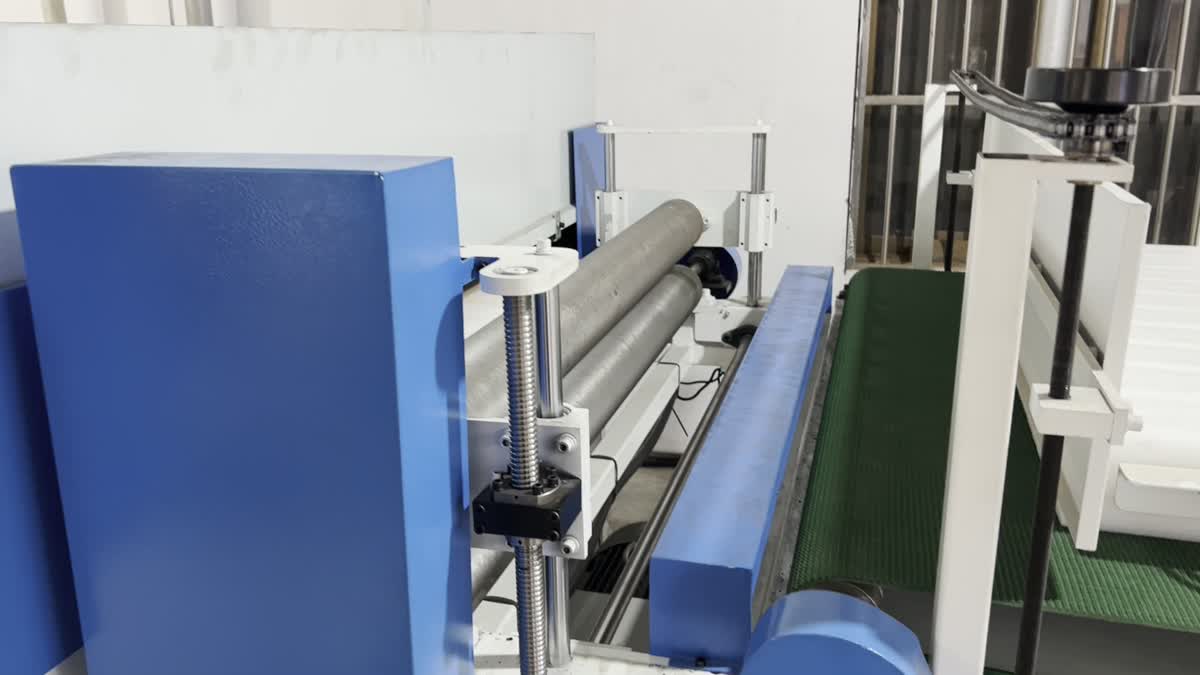
A dedicated rear conveying unit holds a stack of EPE foam sheets and supplies them individually to the press.
When the sensor detects material, the machine advances it by the preset initial feeding distance to position the first row. After that row is cut, feeding continues according to the layout and subsequent feeding distance.
With a traveling-head configuration, the head moves across the sheet by the preset distance to cut the required positions. A four-column press can also be configured according to die dimensions and cutting-force requirements.
Operators replenish the rear supply as needed rather than replacing each sheet after cutting. Cut parts and waste exit together and are separated manually.
| Configuration | Feeding Method | Operator Tasks |
|---|---|---|
| Four-column press | Manual tray movement | Load, move tray, collect parts, replace sheets |
| Single-side table feeding | Powered table movement | Load, collect parts, replace sheets |
| Double-side table feeding | Alternating powered tables | Load and unload both stations, replace sheets |
| Rear conveying unit with roller feeding | Continuous individual-sheet supply | Replenish material, separate parts and waste |
Roll Cutting: Smaller Dies or Full-Row Cutting
Conveyor-Fed Traveling-Head Cutting
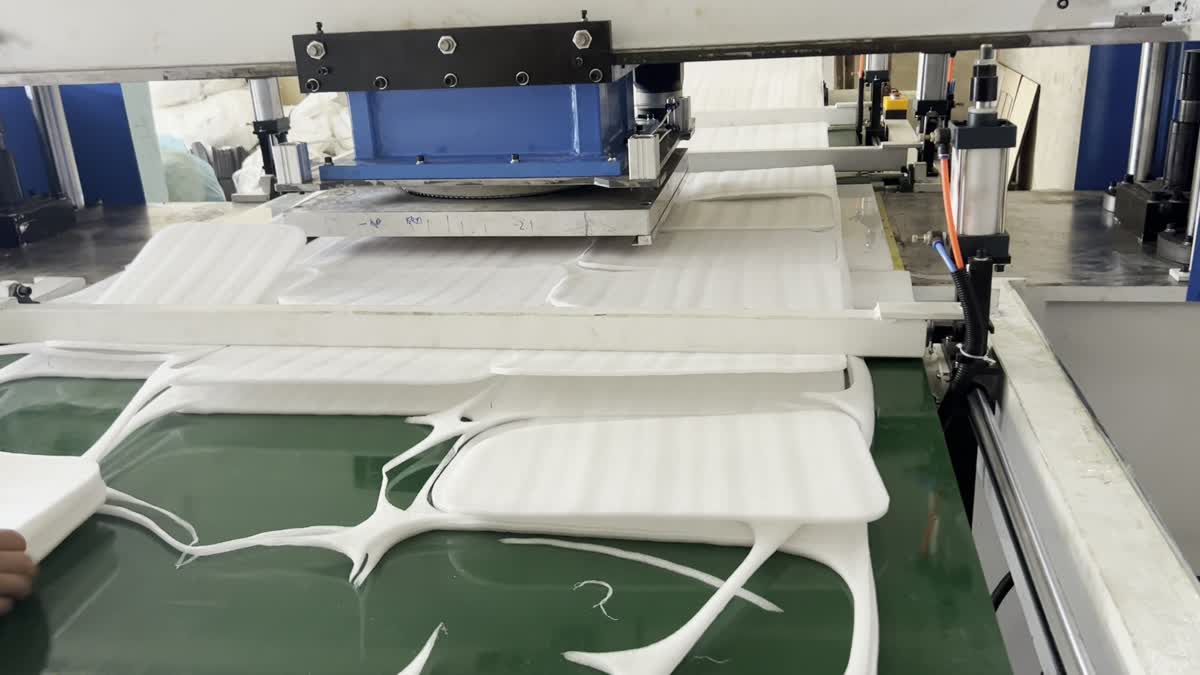
The operator initially threads roll material onto the conveyor. The machine then feeds it automatically, and the traveling head uses a smaller die to cut successive positions across the material.
An operator collects parts at the output conveyor. The waste skeleton generally falls to the floor for collection. Allow space and operator time for part and waste collection.
Conveyor-Fed Four-Column Cutting
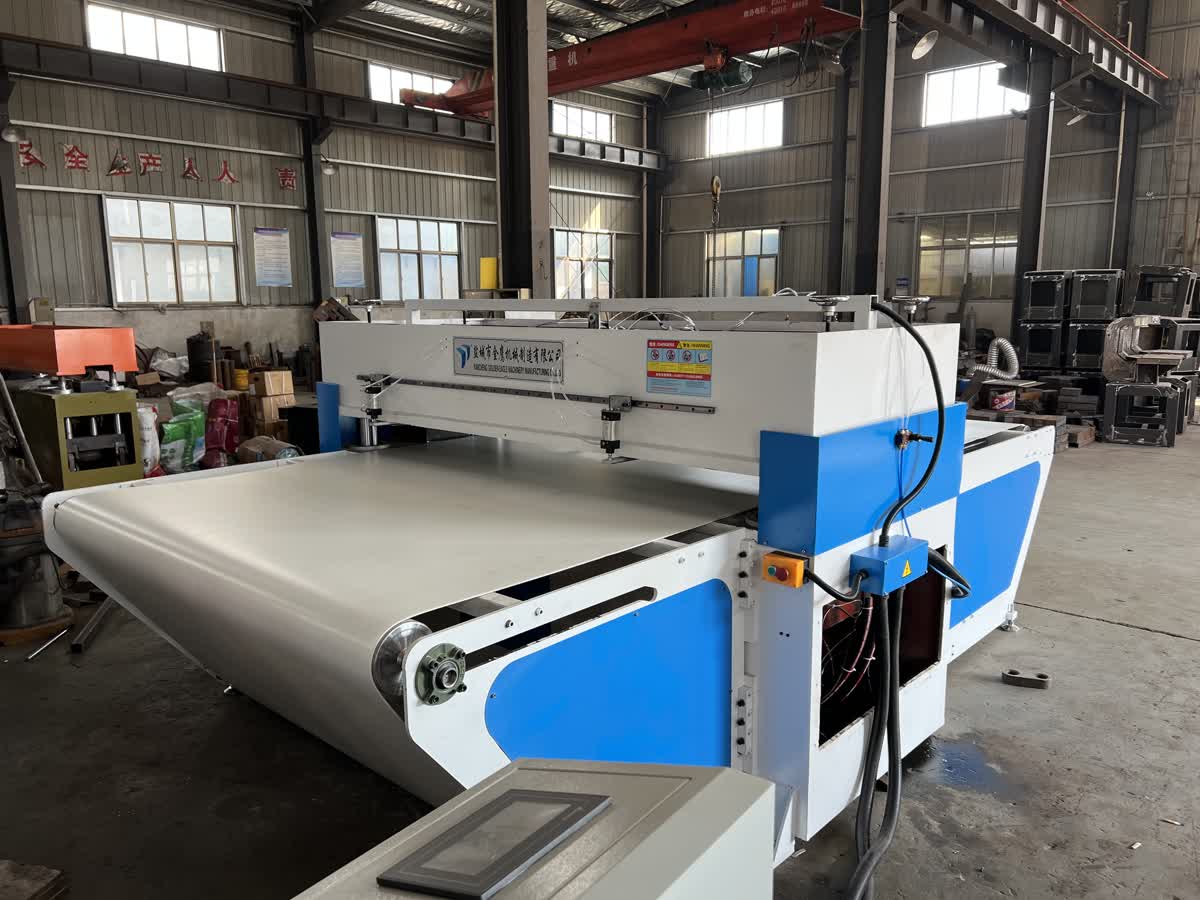
The die is fixed to the upper platen. The conveyor advances the material by the preset distance before the press makes the cut.
This configuration can accommodate a larger die, for example over one metre in size, to cut a complete row of the layout. Required force depends on die dimensions, cutting-edge complexity, material thickness and layer count.
Preparing Large, Thick Sheets Before Die Cutting
Process guide: Check when thick EPE sheets need pre-cutting before die cutting.
With a basic four-column or single- or double-side table-feeding press, large, thick sheets may need to be divided into blanks suited to the die. This reduces compression of surrounding material that is not being formed into the part. Pre-cutting may be unnecessary when incoming sheet dimensions already suit the job.
Vertical and Automatic Vertical Cutting
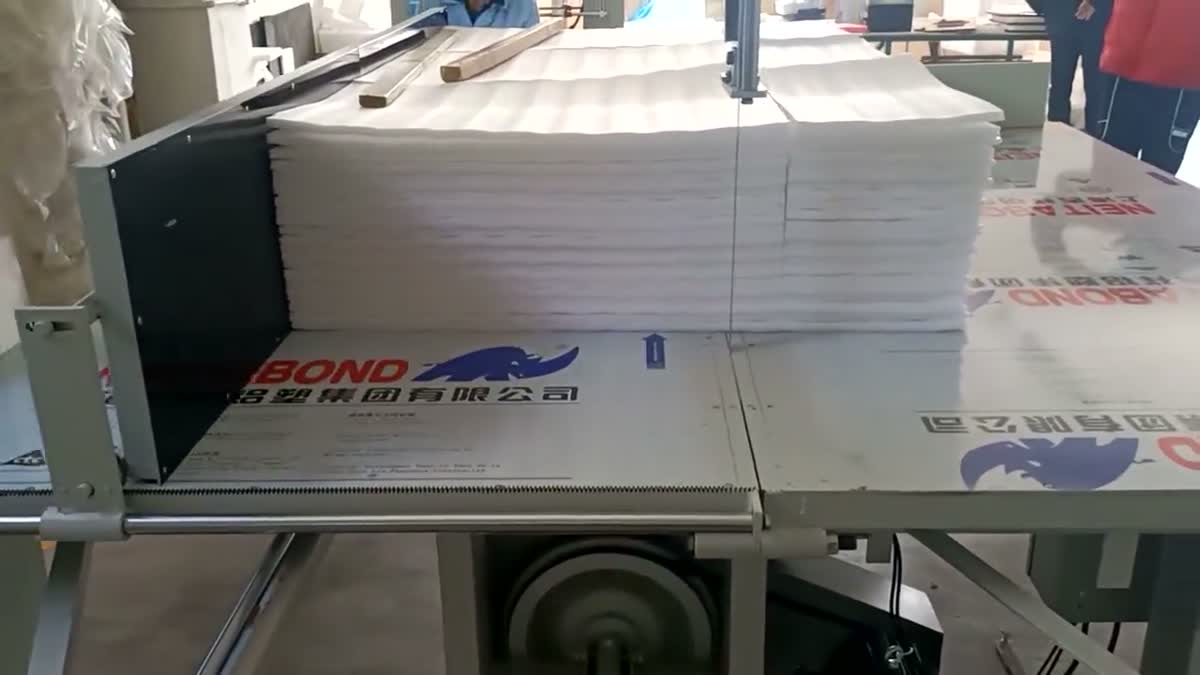
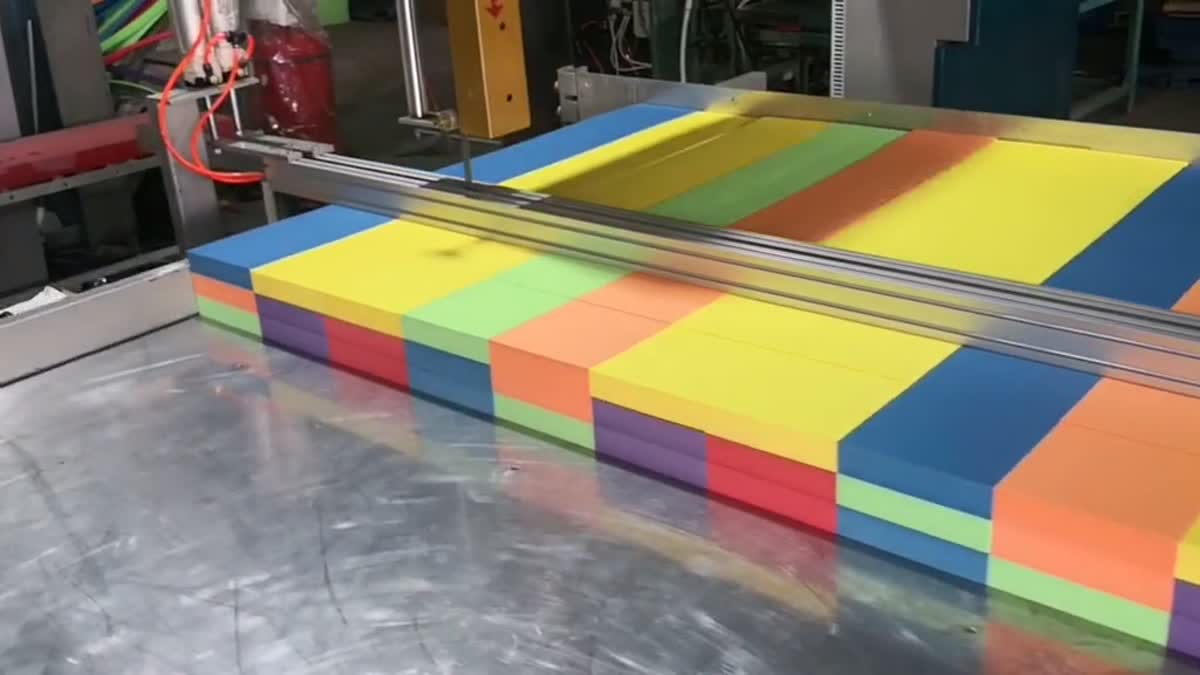
These machines cut large EPE sheets into smaller pieces or blocks for die cutting. They do not split the material into thinner layers.
Cross-and-Longitudinal Slitting
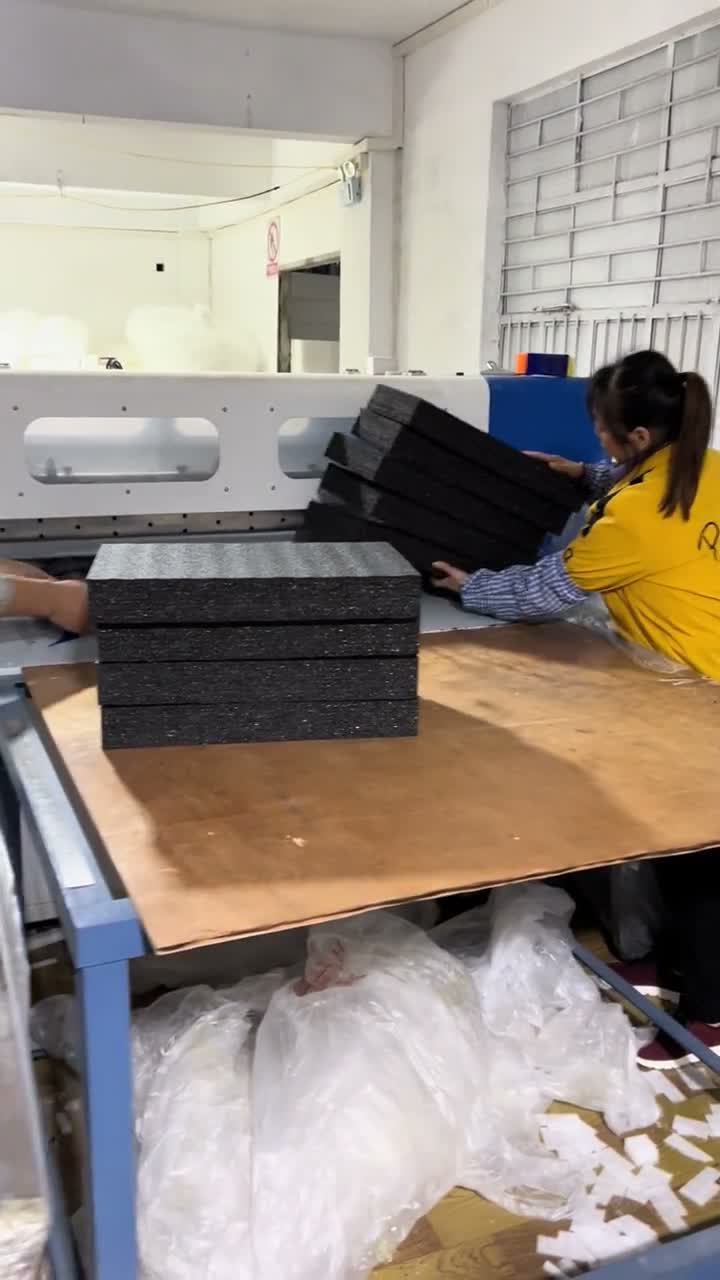
Circular-blade spacing is adjusted manually to set longitudinal cutting width. Cross-cut length is set on the touchscreen. Operators transfer the resulting blanks to the die cutting machine for shaped cutting.
EPE Foam Die Cutting Case: Power-Tool Packaging Inserts
The customer needed to cut different power-tool packaging shapes in large batches from 50 mm thick EPE sheets. We selected a roller-fed traveling-head die cutting machine with a rear conveying unit to supply full sheets continuously.
| Item | Application Details |
|---|---|
| Material | EPE foam sheets |
| Sheet dimensions | 1200 × 2400 mm |
| Material thickness | 50 mm |
| One example finished-part size | 380 × 520 mm |
| Selected equipment | Roller-fed traveling-head die cutting machine with a rear conveying unit |
Why Roller Feeding Was Selected
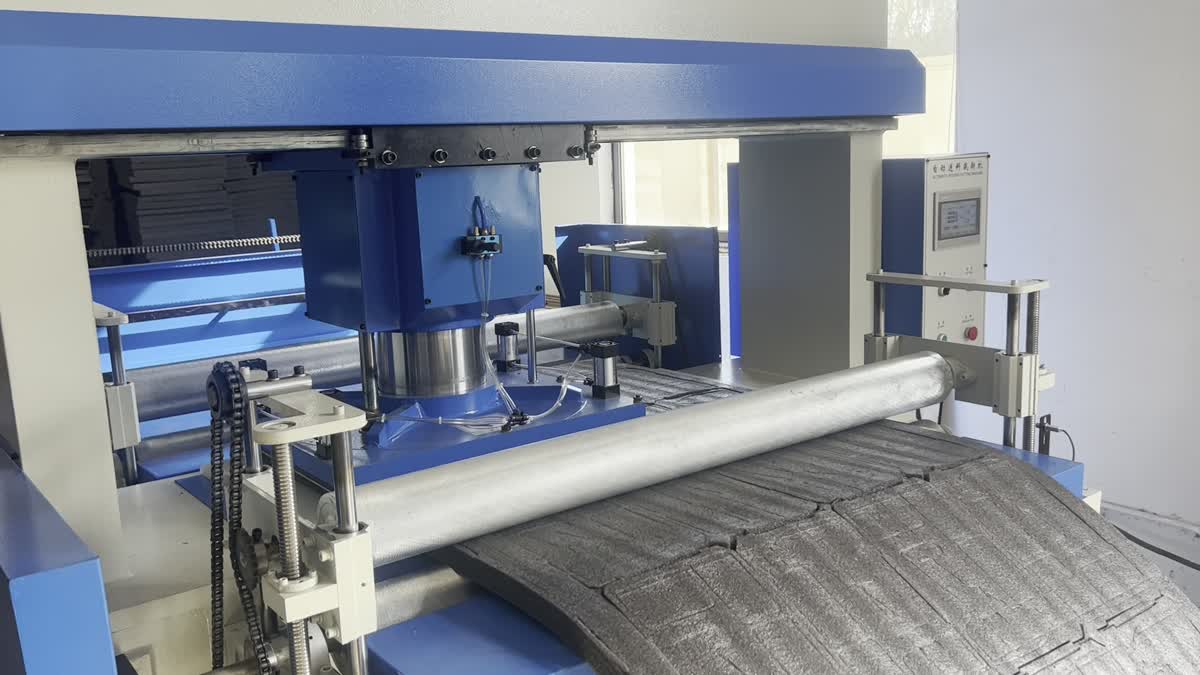
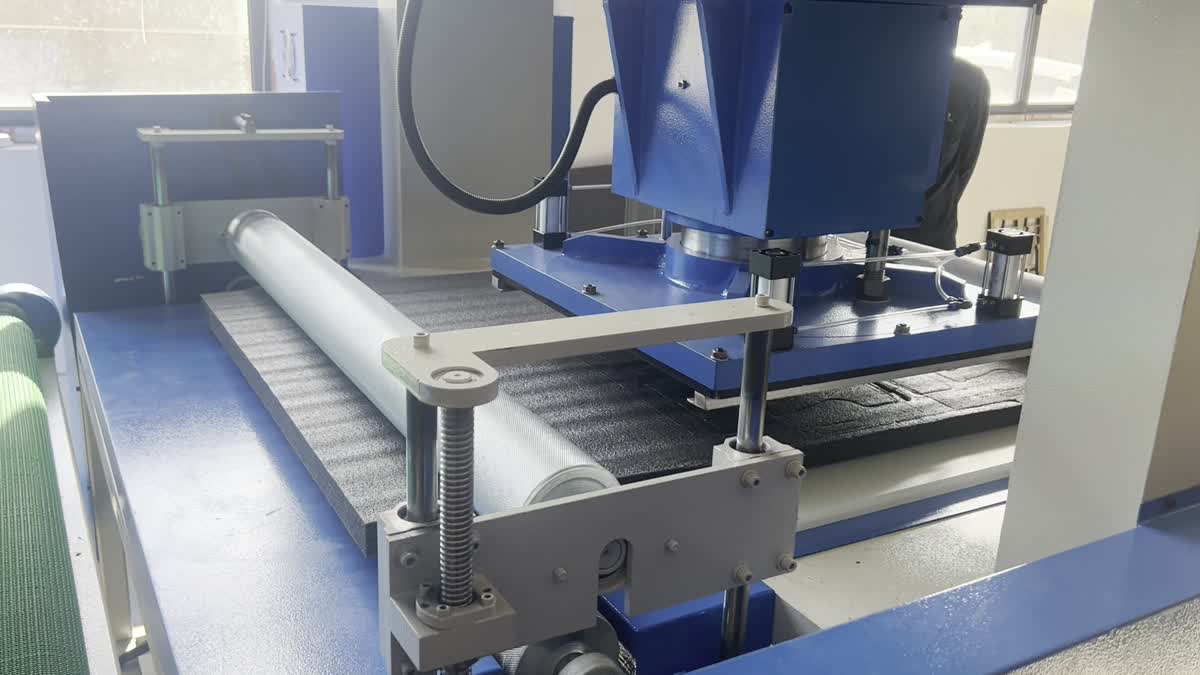
The rear conveying unit supplies whole 1200 × 2400 mm sheets to the press. In this job, the sheets do not need to be pre-cut into smaller blanks. Continuous feeding avoids replacing each sheet individually at the cutting area during batch processing.
Watch the EPE Packaging Cutting Process
Workshop footage of EPE protective packaging die cutting with roller feeding and a traveling cutting head.
Change Dies and Adjust Parameters for Different Products
For a different packaging shape, the operator changes the die and sets feeding distance, initial feeding distance, head traverse distance and cutting depth on the touchscreen.
The operator replenishes the rear sheet supply and separates cut parts from waste at the output.
Frequently Asked Questions
Does thicker foam always require higher tonnage?
Thickness affects required force, but die size, cutting-edge complexity, layer count and compression of surrounding material also matter. Evaluate these factors together.
How does two-stage pressure help the cut result?
It helps reduce EPE foam deformation during cutting and lessen bending along cut edges. The actual result also depends on material, die and processing settings.
Can one machine cut different shapes?
Yes, by changing dies within the machine’s die-size, force and feeding capabilities. The two stations on a double-side table-feeding machine can use different dies with relevant parameters set separately.
Do all large sheets need pre-cutting?
No. This depends on equipment and how the material and die work together. In the power-tool packaging case, full 1200 × 2400 mm sheets enter the roller-fed traveling-head system directly. Do not assume these conditions apply to every machine.
Can these machines process other foams or EVA?
Configurations can be evaluated for the specific material and process. Suitable thickness, layer count, required force and finished-part condition must be assessed separately rather than copied from an EPE application.
Tell Us About Your Material and Cutting Requirements
- Material type and whether it comes as rolls or sheets.
- Material dimensions, thickness and proposed layer count.
- Finished-part drawings, dimensions or sample photos.
- Product variety, changeover needs and staffing.
- Tasks to improve, such as sheet replacement, tray movement, material transfer or pre-cutting.
Photos of existing dies or a short process video are also helpful.
Yancheng Golden Eagle Machinery Manufacturing Co., Ltd.