
Pre-cut thick EPE foam sheets when their length and width do not suit the cutting die, layout or handling arrangement. Foam thickness alone does not determine whether pre-cutting is needed. A roller-fed traveling-head configuration may accept full sheets when the material, die and feeding system are matched to the job.
Pre-cutting is a preparation step. It divides a large sheet into manageable sections for the next operation; the cutting die then produces the required outline.
Reducing compression outside the die
When a thick sheet is much larger than the die, material outside the cutting outline may also be compressed during the pressing operation. Preparing smaller sections closer to the required working size can reduce unnecessary compression around the die.
Choose a section size that fits the die layout and is practical to place and remove. The cutting die, not this preparation step, makes the final packaging outline.
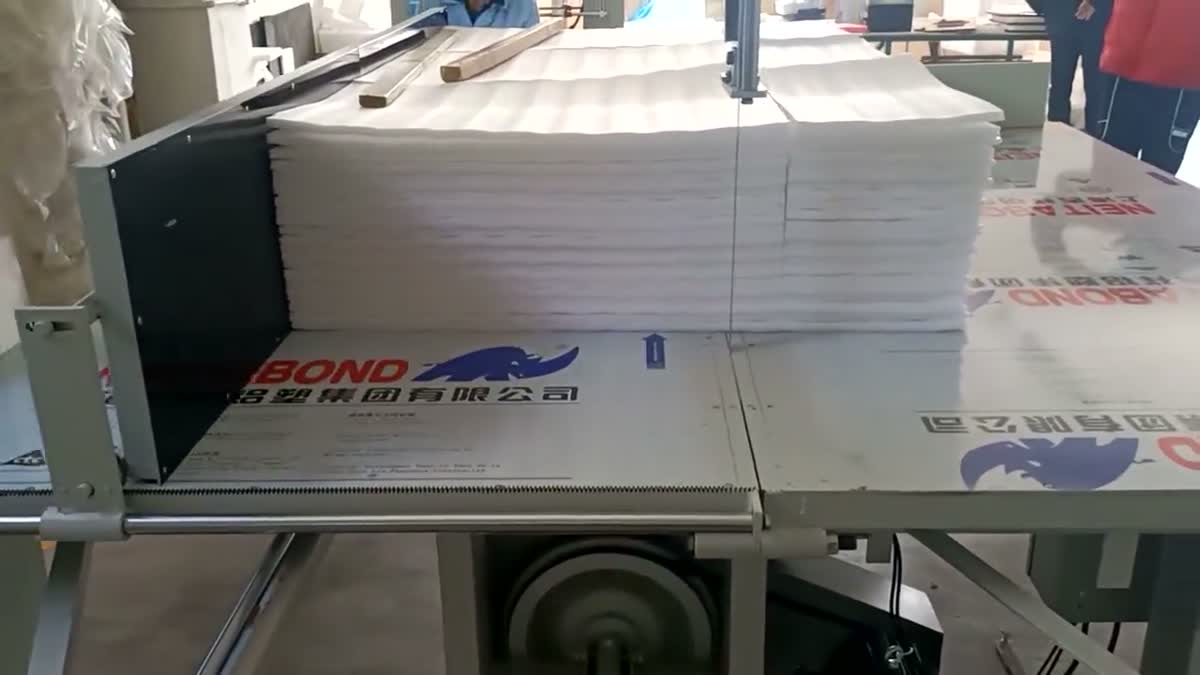
When smaller sections help with loading
For precision four-column presses and single-side or double-side table-feeding presses, large thick sheets may need to be divided into sections suitable for placement, die cutting and manual removal.
If the supplied sheet already fits the intended layout and handling method, an additional pre-cutting step may be unnecessary. Check the incoming dimensions before adding a separate preparation machine.
Pre-cutting changes length and width, not foam thickness
The vertical and automatic vertical cutting machines divide large material into smaller sections; these machines do not split the sheet into thinner layers.
On the cross-and-longitudinal slitting machine, the operator adjusts the circular-blade spacing to set the longitudinal strip width. The cross-cut length is set on the touchscreen. The prepared pieces are then transferred manually to the die cutting machine.
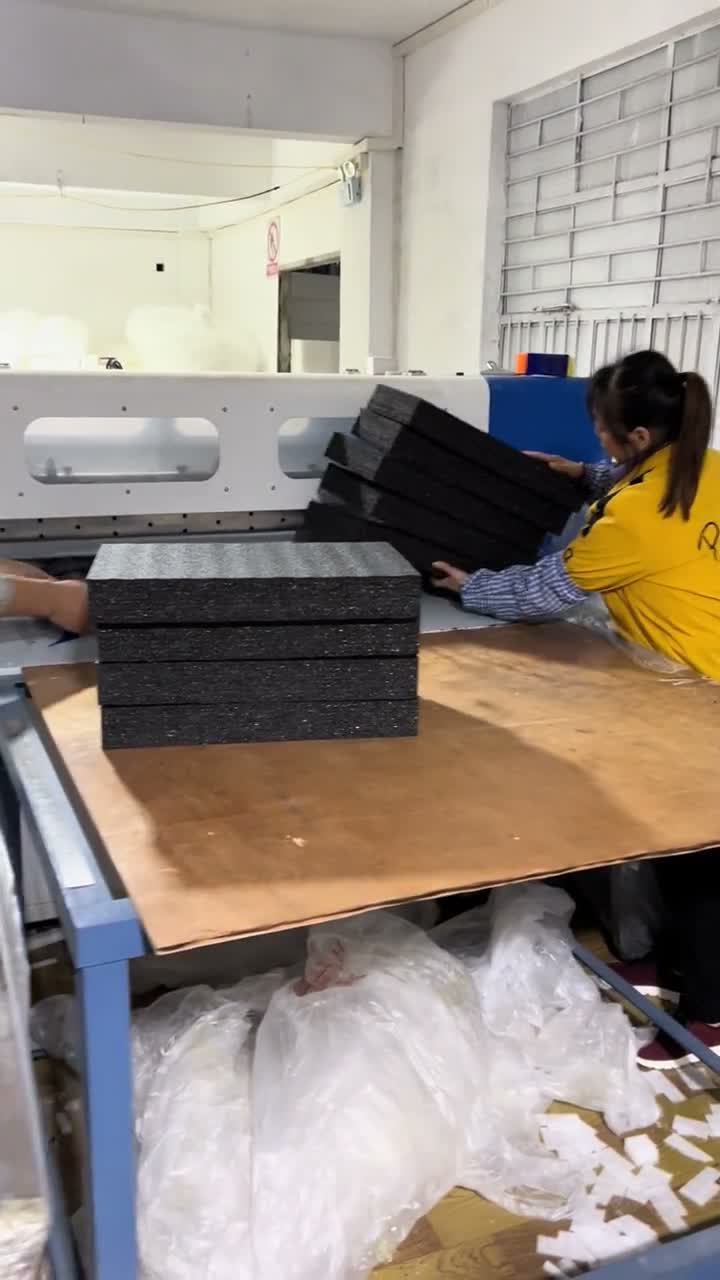
A full-sheet example from power-tool packaging
In our power-tool packaging case, the customer processed EPE sheets measuring 1200 × 2400 mm and 50 mm thick. One required finished-part size was 380 × 520 mm.
The selected solution was a roller-fed traveling-head die cutting machine with a rear conveying mechanism. In that project, the full sheet was placed onto the conveying system without first dividing it into small sections. Feeding and cutting followed the configured distances and layout. Finished pieces and waste left together and were separated manually.
This job used full sheets; another die layout or feeding setup may still need smaller sections. See the EPE foam packaging cutting solutions for the related machine and handling arrangements.
Information to prepare before choosing the process
- Incoming sheet length, width and thickness.
- Finished-part dimensions, cutting die and proposed layout.
- The intended press structure and feeding method.
- How operators will load material, transfer sections, collect parts and separate waste.
Include material preparation, transfer and collection in the plan. Operators spend time on these tasks as well as on the cutting cycle.
For further comparison, read single-side, double-side and roller feeding for EPE sheets, or send your material and die information for a configuration review.
Yancheng Golden Eagle Machinery Manufacturing Co., Ltd.